
Mending as a metaphor
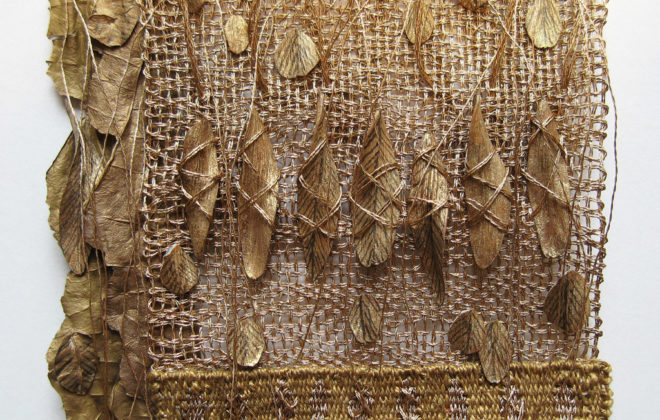
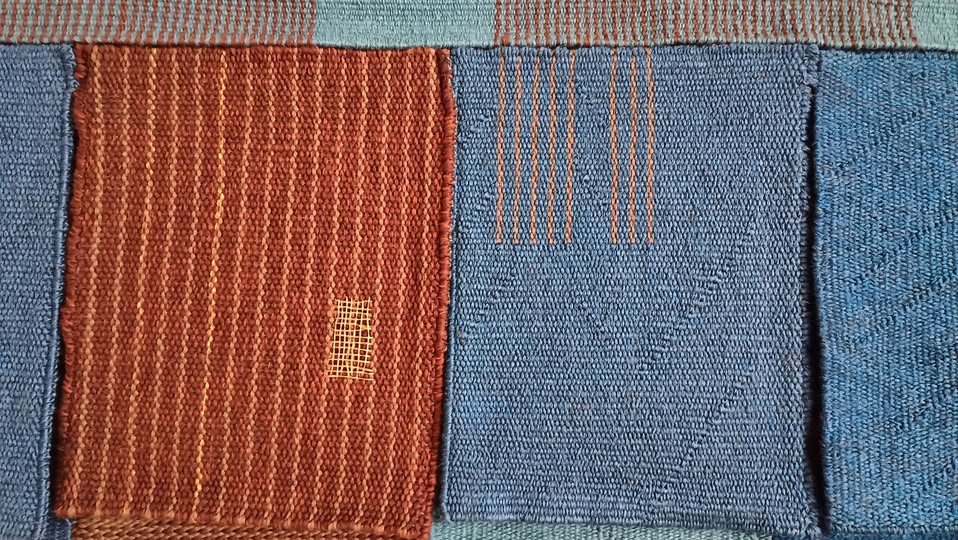
I completed a miniature tapestry recently about metaphorically healing, using the fabric of the tapestry as a stand-in for fabric that can be repaired. The focus was on two traditional Japanese techniques – boro, clothing mended over and over again using sashiko running stitches and patching; and kintsugi, the method of repairing broken crockery using gold to highlight the cracks, rather than the conventional practice of hiding of them.
Historically, people in Japan below the rank of samurai were limited to wearing only blue, brown or grey clothing, and when it needed to be mended or patched, the poorest women used the boro method of stitching. Having to wear repaired clothing was shameful, exhibiting their poverty, despite the beauty of the mending. (Ironically, these examples of boro are now sought after by collectors as being both beautiful and valuable.) Wealthy people in Japan mended their ceramics using kintsugi, which, on the other hand, emphasises and almost revels in the breakage. I have combined the techniques and modified them to make a tapestry that focuses on healing. Everyone needs to be healed or mended, whatever their station.
This larger tapestry is made in sections to refer to patches. A larger section is in quiet stripes, similar to those of traditional samurai garments, subverting the laws that prevailed in historic Japan. Over the surface of some of the sections are visual rectangles of darning, often in gold. A weaving technique called ‘pass by half pass’ simulates the sashiko running stitch.
The act of weaving itself is about joining and connecting, and repair is about making whole. The tapestry becomes a metaphor showing visible scars being restored, using whatever method of healing is appropriate, whether in textiles or in the human heart.
See also, https://joannesoroka.co.uk/boro-kintsugi/